Roaming bills feel like a tax on spontaneity. You land, switch off airplane mode, and suddenly your phone becomes a meter. A couple of maps, a few photos sent to family, a rideshare to the hotel, and you’re already past your plan’s daily cap. It doesn’t need to be this way. A free eSIM trial, or a low‑cost eSIM trial plan, lets you test local data on your phone before committing, and often for pennies. If you’ve never tried a digital SIM card, it’s easier than it sounds, and it can replace roaming for most trips.
I’ve used travel eSIMs for everything from a single client meeting in Paris to a month of train hops through the Balkans. The key is choosing the right mobile data trial package, getting the setup right, and understanding a few small gotchas that catch first‑timers. Once you do, the savings are real, the number porting stays simple, and your home number continues to work over Wi‑Fi or as a secondary line.
Why eSIM trials exist and how they save you money
Traditional roaming rides on wholesale agreements between carriers. Your home provider pays a partner network abroad, then passes the cost along. Daily roaming passes help, but at 8 to 15 dollars per day in the USA or 2 to 6 pounds per day in the UK, a week abroad stacks up quickly. An eSIM trial plan works differently. You buy a short‑term eSIM plan directly from a local or regional provider, or you accept a mobile eSIM trial offer that gives you a slice of data to test performance. Because the traffic stays on local networks, the price falls dramatically.
You’ll see a range of offers: a global eSIM trial that gives 100 to 300 MB in dozens of countries, a country‑specific eSIM free trial USA designed to test coverage stateside, or a free eSIM trial UK that targets visitors to Britain. Some providers advertise a “try eSIM for free” pitch, others do a token‑priced eSIM 0.60 dollar trial to prevent fraud while still keeping the barrier low. Think of these trials as a speed and coverage test you can run from your kitchen before you fly, or from the arrivals hall while you wait for bags.
If you pick a good prepaid eSIM trial and the signal holds, you then upgrade to a low‑cost eSIM data bundle sized for your itinerary. That’s the cheap data roaming alternative many travellers are after: pay for local data only, skip your home carrier’s roaming entirely, and keep the bill predictable.
A quick reality check: what “free” really means
Nothing in telecom is truly free. A free eSIM activation trial usually falls into one of three categories. The first is a data sampler, maybe 100 MB up to 1 GB, running for 1 to 7 days. The second is a carrier‑specific trial where you port or temporarily use a new line, common in the US as a way to audition a network. The third is a heavily discounted starter, like an eSIM $0.60 trial that functions like a paid plan but at nominal cost, often limited to one per user or device.
Expect guardrails. Trials may throttle speeds, block tethering, or only work in select regions. Some require an account or identity verification. This is not the plan you stream Netflix on. It is the plan you use to check if the local provider hits your hotel and workspace with decent signal, confirm your phone’s compatibility, and gauge latency for maps, rideshare, and messaging.
The practical workflow I use
If a trip is under two weeks, I favor a temporary eSIM plan tied to the destination or region. If I’ll cross multiple borders, a regional or global eSIM trial helps me test coverage in the first country, then I ladder into an international eSIM free trial upgrade or a paid multi‑country pack. For long trips, I combine a cheap starter pack with data top‑ups rather than a single large plan. It keeps costs flexible and avoids wasting prepaid data.
A travel habit that keeps things smooth: install the eSIM one day before departure while you’re still on home Wi‑Fi, but leave it disabled until you land. Scan the QR code, label it clearly, and turn off data roaming on your primary line to prevent accidental home‑carrier charges. When you arrive, toggle the eSIM on and test.
How to set up an eSIM trial without drama
The process is predictable across iPhone and most Android devices. Start with compatibility. iPhone XR and later models support eSIM, and most modern Android flagships do as well, though dual SIM behavior varies. If your phone is carrier‑locked, you can usually still use a travel eSIM for data while keeping your home line for calls over Wi‑Fi, but check with your carrier.
Only include a list where it truly simplifies setup, and keep it short. Here is the compact checklist I give friends who want to avoid roaming fees but keep their number reachable.
- Confirm eSIM support and any SIM lock with your home carrier. Pick an eSIM trial plan that covers your destination and dates. Install the eSIM while on trusted Wi‑Fi, label it by country or trip. Set the eSIM as the data line, keep your home SIM for calls/texts. Turn off data roaming on the home line to avoid accidental charges.
That last step matters. Phones sometimes fall back to the home network for data if a setting toggles during setup. Make it impossible.
Picking between local, regional, and global trials
A country eSIM is usually the best price per GB if you’re sticking to one place. For example, a prepaid travel data plan for Spain or Thailand can be 1 to 3 dollars per GB when you buy 5 to 10 GB. Regional bundles cover, say, 30 European countries or a cluster in Asia, with a small premium for the convenience of borderless service. A global eSIM trial is the safety net. It works in a long list of countries but costs more per GB and sometimes caps speed in remote areas.
I’ve tested trips where the country plan delivered full 5G in major cities but dipped to 3G in rural zones, while a different regional provider held steady at 4G. That’s the real value of an international eSIM free trial. You can test signal in the exact neighborhoods you’ll frequent rather than trusting a coverage map. Maps are marketing. Trials are truth.
Where a trial saves you the most money
Short stays with heavy navigation and light media use are perfect for trials. Think a three‑day stopover, a conference week, or a weekend wedding abroad. With 300 to 500 MB per day, maps, messages, rideshare, and email are covered. Social scrolling and cloud backups will torch that budget, so keep them on Wi‑Fi.
Commuters and frequent flyers who bounce between the USA, UK, and EU often patch together multiple trials over a month, then settle on a best eSIM provider for each corridor. For example, try an eSIM free trial USA to judge city coverage and 5G consistency, then compare a free eSIM trial UK for your London leg. After a week of testing, you’ll know which network handles subways, airports, and hotels without dead zones.
When a plan advertises unlimited data but with fair use, read the small print. Some “unlimited” eSIM offers for abroad slow to 512 kbps or less after a threshold. For messaging and email, that’s fine. For photo backups or tethering a laptop, it can be frustrating.
What a free eSIM can’t do
Trials don’t solve every problem. If your accommodation has concrete walls and interior rooms, you might need Wi‑Fi calling or a femtocell, not just a stronger SIM. If your work requires a static IP, many prepaid eSIMs won’t help. Some apps flag frequent IP changes and may prompt extra verification. Also, although most travel eSIMs allow hotspot use, certain trials block tethering to preserve network resources.
Be wary of VoIP in countries with restrictions. Messaging apps generally work, but plain old calls might drop or require workarounds. If calls are essential, test with the trial before committing.
Managing two lines without missing calls
Dual‑line phones make this simple if you know which settings to touch. Set your trial eSIM as the default for cellular data and leave voice and SMS on the home line. Enable Wi‑Fi calling on the home line so inbound calls reach you in buildings with weak signal. On iPhone, watch the “Allow Cellular Data Switching” setting. If left on, the phone may shift data back to the home SIM during a poor signal moment and trigger roaming. Turn it off unless you want that behavior.
For Android, menu labels differ, but the logic is the same. Assign data to the eSIM, calls and texts to your home number, and disable home‑SIM data roaming. Give each line a clear label like “Japan data” or “UK trial” so you can see at a glance which is active.
The economics: why a few dollars up front pay off
A home carrier’s daily pass at 10 dollars sounds painless for one day. Stretch that over eight days and that’s 80 dollars, often for 0.5 to 2 GB per day. A short‑term eSIM plan can deliver 5 to 10 GB for 10 to 25 dollars in many destinations, and you can add data in small increments if you run low. Even if you start with a mobile data trial package that costs a token fee, the early test prevents buying a plan you’ll regret.
The flip side: if your travel is sporadic and data use is minimal, the daily pass might be fine. I know consultants who prefer to pay their carrier to keep life simple, and when the client reimburses, it’s a non‑issue. If it’s your own money, or you need more than a gig per day, a trial eSIM for travellers quickly pays for itself.
Speed, latency, and the real user experience
Signal bars lie. I watch latency first. Maps, rideshare, and messaging care about ping, not just throughput. A trial tells you if the network’s core is busy at rush hour, if your hotel has a dead zone, and whether upload speeds can handle a quick photo burst from a crowded venue. I’ve seen 200 Mbps downloads that felt slow because the ping was jumping from 40 to 800 ms. That makes navigation laggy.
If video calls matter, do a five‑minute test at the same time of day you’ll be working. Walk around your accommodation and conference rooms. Trials are short, so use them deliberately.

Privacy and payment realities
A free eSIM trial might still require an email, card on file, or even ID in certain jurisdictions. EU know‑your‑customer rules can be strict. If you value privacy, pick a provider with transparent data policies and the ability to delete your profile after the trip. Consider using virtual cards for small trial charges. Keep in mind that providers combating fraud may block sign‑ups from VPN IPs, so install from a normal connection.
Handling top‑ups and plan switches without downtime
Most modern eSIM apps attach top‑ups to the same digital profile, so you don’t need to reinstall or re‑scan a QR code. That’s handy when you’re on a train with spotty coverage. If you must switch providers mid‑trip, leave both eSIMs installed for a day, but keep only one active for data. Label clearly to avoid confusion.
A small etiquette tip: download offline maps for the city or country before you fly, and queue up translation packs. That reduces stress if a trial plan activates slowly or you land during a network hiccup.
Edge cases that trip people up
A dual‑SIM iPhone with a physical SIM and an eSIM can run both lines, but certain older Android models disable one when the other uses 5G. In that case, lock your data line to 4G if you must maintain both lines simultaneously. Some devices only support one eSIM at a time even if they can store multiple profiles. If you’re planning a multi‑country run with several eSIMs, check your device’s stored profile limit. It’s often 5 to 8. Delete old profiles once you’re done.
Corporate devices with mobile device management can block eSIM installation. If your phone is company‑issued, ask IT to enable eSIM or consider a personal secondary phone for travel.
How to compare providers without getting lost in options
Every storefront sounds similar: best eSIM providers, largest coverage, fastest speeds. I ignore slogans and look for four practical signals. First, a real eSIM free trial or low‑cost starter, so I can test without sunk cost. Second, a clear coverage list with network partners named, not just “4G/5G available.” Third, sensible increments on data packs, like 3, 5, 10, 20 GB, with rollover or easy top‑ups. Fourth, an app or portal that shows real‑time usage down to the MB, along with expiry dates.
User reviews help but read them with context. Complaints often stem from device settings rather than the network. A provider that explains how to disable data switching and how to prioritize the right line is already thinking about real‑world issues.
Using a trial eSIM alongside Wi‑Fi and offline tools
The cheapest data is the data you don’t use. With a trial in place, lean on hotel and café Wi‑Fi for heavy tasks like cloud backups or big downloads. Turn off automatic photo upload on cellular. If navigation is your main use, preload offline maps for your metro area. Keep messaging apps set to low‑data mode where available. These small habits stretch a 1 to 3 GB short‑term eSIM plan far beyond what most people expect.
The USA and UK specifics
The eSIM landscape differs by country. In the USA, a few carriers run promotional eSIM free trial USA offers that put you on their network for a week or so with limited data. They’re designed to poach subscribers, but they double as a roaming workaround if you’re just visiting and want to test coverage. T‑Mobile has historically offered trials like this through its app. MVNOs and travel eSIM brands fill gaps with county or regional data packs that ride on major networks.
For the UK, a free eSIM trial UK is more likely to come from a travel eSIM intermediary than a domestic MNO, though local carriers sometimes run short promos. Speeds in major cities are excellent, but rural coverage varies by network. If you’ll be outside London or the big corridors, test the exact network you plan to use, not just a generic UK package.
When a global eSIM trial earns its keep
Multi‑stop itineraries with unpredictable routes benefit from a global eSIM trial. You sacrifice a bit on price, but you gain flexibility. Think Johannesburg to Doha to Tokyo in ten days. Buying a local eSIM for each stop wastes time and data. A single trial to test connectivity, followed by a global or Asia/Middle East pack, keeps you moving. This is also useful for airline staff, tour leaders, and photographers who can’t predict signal needs per day.

Tethering a laptop without blowing the cap
Trials often limit tethering or throttle after a threshold. If you need to tether, check the terms before buying. When allowed, use tricks to keep usage low: disable system updates on your laptop, pause cloud sync, and load heavy pages in reader mode. If you run a video call from your laptop, cap your resolution at 360p or 480p. Realistically, for remote work beyond email and chat, move from a trial to a larger prepaid eSIM trial upgrade quickly.
Keeping your home number reachable while avoiding charges
Friends worry that abandoning roaming means missing important calls. You don’t have to. With the eSIM configured as data‑only, your home line can receive iMessage, WhatsApp, Signal, and Wi‑Fi calls whenever you’re connected. If your home carrier’s voicemail charges for roaming access, use visual voicemail over Wi‑Fi or redirect callers to a data‑based number during travel. Another option is a dedicated travel number that forwards to your primary messaging apps.
Troubleshooting common hiccups
If the eSIM doesn’t activate after scanning, wait a few minutes, then restart the phone. Confirm that the APN settings match what the provider listed in the app or email. If data isn’t flowing, ensure the eSIM is set as the default data line and the right SIM displays the 4G or 5G icon. Toggle airplane mode on and off to force a fresh network attach. If speeds are oddly low, check whether the trial plan caps throughput, then try a different network manually if the provider allows carrier selection.
If you hit a paywall mid‑trial, it might be an automatic throttle once you cross the data allowance. Most apps show remaining balance; keep an eye on it during heavy use.
A simple example itinerary with real numbers
A five‑day city break in Rome: you install a prepaid eSIM trial with 500 MB of sample data upon arrival. Day one, you use 200 MB for maps and messages while you confirm coverage across your hotel, the metro, and key sites. That evening, you buy a 3 GB short‑term eSIM plan for 8 to 12 euros within the same app. You disable cloud photo backup on cellular and let it sync overnight on hotel Wi‑Fi. By day five, you’ve used around 2.2 GB and have headroom for the airport ride.
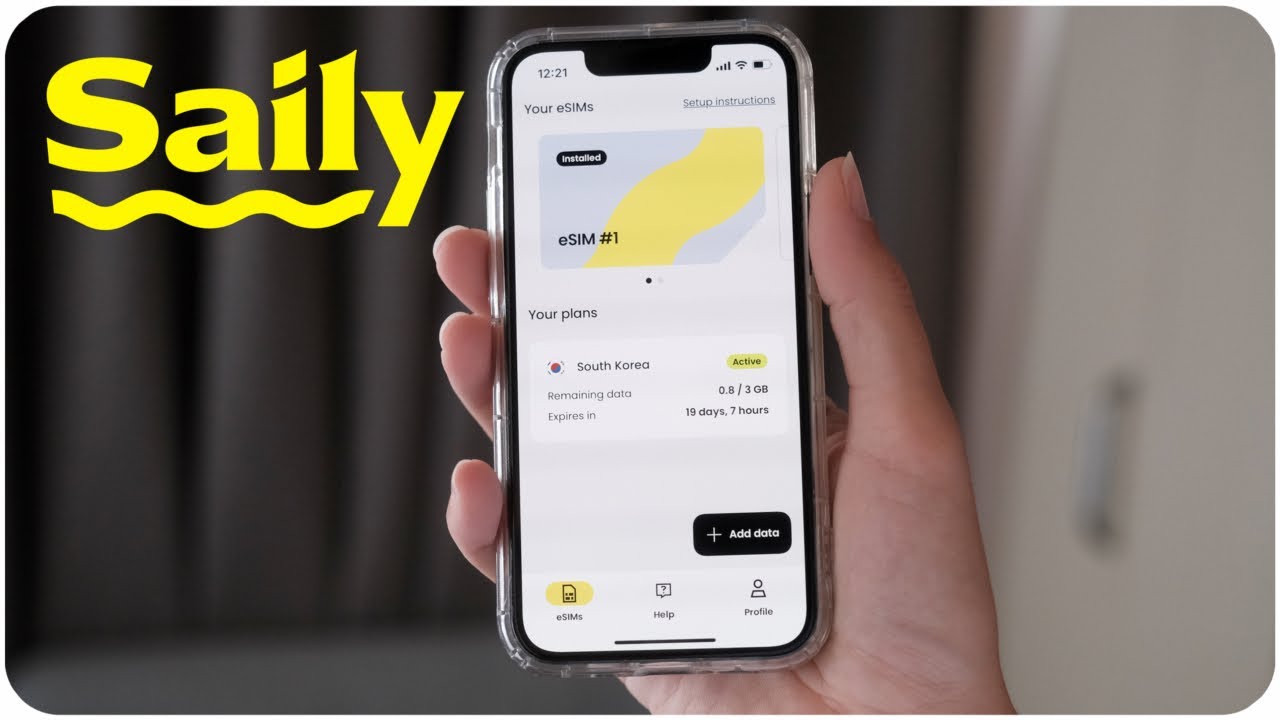
A two‑week work trip to the USA: you start with an eSIM free trial USA that offers a week and 3 GB. Performance checks out in your main cities. You then add a 10 GB plan for 20 to 30 dollars, which covers maps, Slack, email, and a few video calls at 480p. Compared to a 14‑day roaming pass at 10 dollars per day, your cost falls from roughly 140 dollars to under 40, with better speeds.
Security hygiene while you experiment
Only install profiles from trusted apps or QR codes. Do not scan screenshots from random forums. If a provider emails a QR code, verify the domain and SSL. Remove the eSIM when you’re done with the trip, especially if it required personal info for activation. Keep your device updated, but avoid major OS updates in the middle of travel. And remember that public Wi‑Fi remains a risk, so keep your VPN and 2FA methods ready.
When a “free” deal is not worth it
If the trial requires a long https://telegra.ph/Prepaid-Travel-Data-Plan-Trials-What-to-Expect-02-01 signup flow, locks you into auto‑renew, or hides fees behind vague terms, move on. A respectable mobile eSIM trial offer makes it clear what you get, where it works, and what happens when it ends. If customer support is only a chatbot and you can’t find a reasonable response time, consider another provider. A slightly more expensive but transparent plan beats a freebie that fails when you need it.
The bottom line for travellers
It takes about ten minutes to set up a trial eSIM, and those minutes can save you a week of roaming charges. Start with a limited esim free trial or a tiny paid starter, verify coverage where you’ll live your trip, then scale up to the right data pack. Keep your home number alive over Wi‑Fi, lock down your settings to prevent accidental roaming, and use offline tools to control usage. Whether you’re a tourist chasing good gelato or a consultant juggling clients across borders, a thoughtful eSIM setup turns data from a liability into a quiet, reliable backdrop for your plans.
With a little practice, you’ll know when to pick a country plan, when a regional pack makes more sense, and when a global eSIM trial is the safety net you need. The best eSIM providers are the ones you forget about during the trip, because everything just works and the bill doesn’t bite when you get home.